
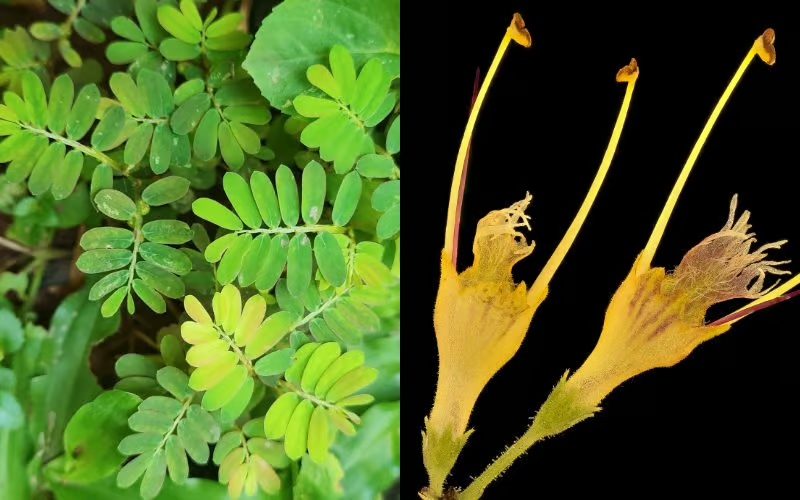
Litholytic Herbs: Nature’s Stone Breakers
History of Litholytic Herbs
Litholytic herbs have been an integral aspect of traditional medicine across cultures for their ability to dissolve and prevent stones in the body, such as kidney and gallstones. These herbs were believed to not only relieve pain caused by stones but also actively break down or dissolve them into smaller fragments, allowing the body to expel them more easily. Additionally, litholytic herbs were employed to regulate bodily functions, promote detoxification, and prevent recurring stone formation.
Over time, litholytic herbs have served as a bridge between traditional healing methods and modern medical research. Despite the availability of surgical and pharmaceutical interventions today, the natural solutions provided by these herbs continue to play a significant role in holistic healthcare.
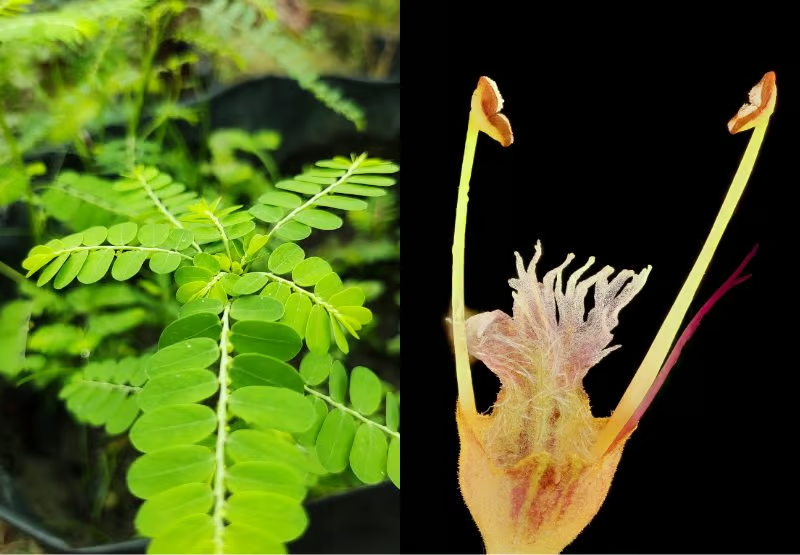
Litholytic herbs have been an integral aspect of traditional medicine across cultures for their ability to dissolve and prevent stones in the body, such as kidney and gallstones. These herbs were believed to not only relieve pain caused by stones but also actively break down or dissolve them into smaller fragments, allowing the body to expel them more easily. Additionally, litholytic herbs were employed to regulate bodily functions, promote detoxification, and prevent recurring stone formation.
Over time, litholytic herbs have served as a bridge between traditional healing methods and modern medical research. Despite the availability of surgical and pharmaceutical interventions today, the natural solutions provided by these herbs continue to play a significant role in holistic healthcare.
Ancient Roots
- South American Traditions: Chanca Piedra, meaning “stone breaker” in Spanish, has been an essential part of Andean herbal medicine for centuries.
Its use extends throughout South American countries like Peru, where it was employed to treat kidney stones, urinary disorders, and digestive ailments.
Documents refer to Phyllanthus niruri as a litholytic powerhouse capable of alleviating stone-related symptoms, making it integral in traditional Cuban and Andean practices.
Modern studies continue to explore its anti-inflammatory and stone-dissolving capabilities, confirming the wisdom of these ancient traditions.
- Native North American Practices: Collinsonia Root, or “stone root,” features prominently in Native American medicine.
Indigenous peoples and early settlers relied on its potent mix of saponins, mucilage, and tannins to improve urinary and vascular health.
It was traditionally used to reduce inflammation, ease spasms, and relax the ureters and urethra to support the passage of small stones.
Early records suggest applications for abdominal pain, pelvic conditions, and respiratory ailments, though further research is needed to validate its full range of benefits.
- Ayurvedic Knowledge: Dating back over 3,000 years, Ayurveda has been a life source for treatments involving urinary stones.
Herbal Formulations: Compounds such as ashmaribhedana (stone-breaking) and mutraladravyas (diuretics) targeted stone dissolution and flushing.
Plants like Aerva lanata, Trigonella foenum-graecum (fenugreek), and Macrotyloma uniflorum (horse gram) were expertly combined with dietary guidance.
Urinary stones were categorized by humoral imbalances: vata (oxalate stones), pitta (urate stones), and kapha (phosphatic stones).
- Eastern and African Practices: Herbs like Opuntia ficus-indica (prickly pear) and Petroselinum crispum (parsley) have been vital in litholytic treatments. Research underscores fenugreek’s more pronounced effect on carbapatite stones while parsley demonstrates moderate effectiveness.
Chanca Piedra & Collinsonia Root
Chanca Piedra (Phyllanthus niruri), often referred to as “stone breaker,” and Collinsonia Root (Collinsonia canadensis), commonly known as “stone root,” are two remarkable medicinal herbs celebrated across diverse cultural traditions. Chanca Piedra, renowned in tropical regions like Latin America and Southeast Asia, is widely valued for its ability to support kidney and gallstone health, while also offering anti-inflammatory and antioxidant benefits. On the other hand, Collinsonia Root boasts a deep historical significance in Native American and early American herbal medicine, where it was used to promote vascular, urinary, and digestive health, including the alleviation of kidney stones and hemorrhoids. Despite their distinct origins, both herbs share a legacy of supporting natural healing and harmonizing bodily functions. Together, they exemplify the timeless wisdom of herbal medicine, proving its relevance in both traditional and contemporary wellness practices.
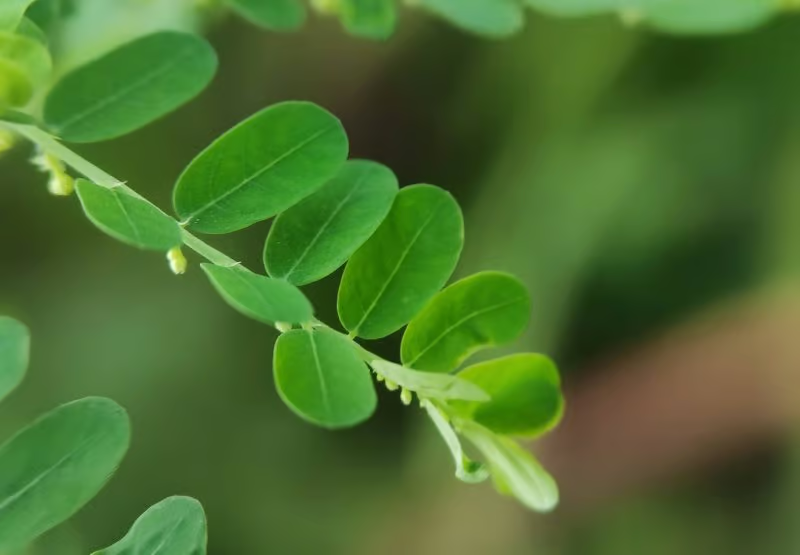
Chanca Piedra
Traditional Use
Known as “stone breaker,” Chanca Piedra has been used for centuries to dissolve kidney and gallstones.
Indigenous cultures in South America, particularly Peru, employed it for urinary, digestive, and liver health.
In Ayurvedic medicine, it’s used for bile-related issues, liver disorders, urinary tract infections, and viral ailments.
Recognized globally as a litholytic herb for its ability to break down stones and detoxify the body.
Chanca Piedra
Traditional Use
Known as “stone breaker,” Chanca Piedra has been used for centuries to dissolve kidney and gallstones.
Indigenous cultures in South America, particularly Peru, employed it for urinary, digestive, and liver health.
In Ayurvedic medicine, it’s used for bile-related issues, liver disorders, urinary tract infections, and viral ailments.
Recognized globally as a litholytic herb for its ability to break down stones and detoxify the body.
Collinsonia Root
Traditional Use
- Commonly known as “stone root,” Collinsonia Root has been valued for its ability to support urinary, vascular, and digestive health.
- Native American medicine utilized it to relax the ureters and urethra, aiding the passage of kidney stones.
- Early settlers relied on it to treat abdominal pain, pelvic conditions, respiratory ailments, and hemorrhoids.
- Known for its anti-inflammatory effects, it was traditionally used to ease spasms, reduce swelling, and improve circulation.
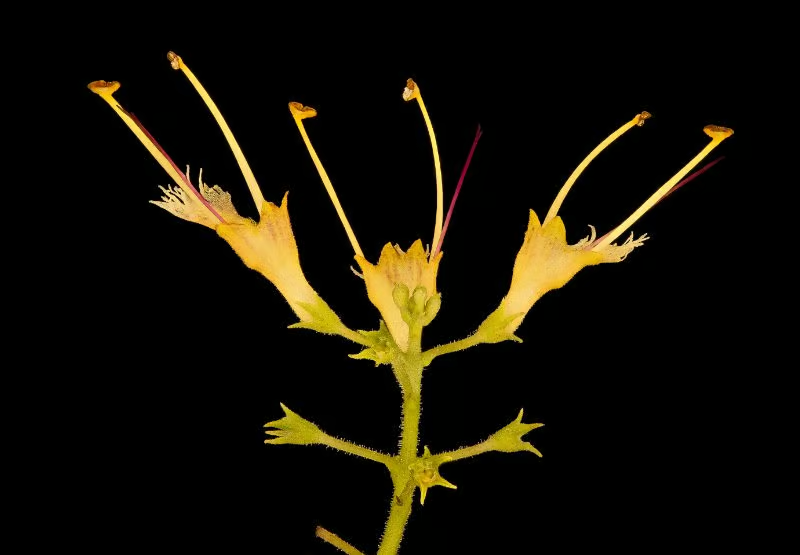
Collinsonia Root
Traditional Use
- Commonly known as “stone root,” Collinsonia Root has been valued for its ability to support urinary, vascular, and digestive health.
- Native American medicine utilized it to relax the ureters and urethra, aiding the passage of kidney stones.
- Early settlers relied on it to treat abdominal pain, pelvic conditions, respiratory ailments, and hemorrhoids.
- Known for its anti-inflammatory effects, it was traditionally used to ease spasms, reduce swelling, and improve circulation.
Botanical Descriptions & Natural Habitat
Chanca Piedra
Botanical Description
A small herbaceous plant in the Phyllanthaceae family, growing 30–60 cm (12–24 inches) tall.
Features bright green, oval-shaped leaves arranged along thin stems.
Produces tiny pale green to greenish-white flowers underneath its leaves, alongside capsule-like fruit containing seeds.
Contains bioactive compounds such as alkaloids, flavonoids, tannins, lignans, and glycosides, contributing to its anti-inflammatory, antioxidant, and litholytic properties.
Natural Habitat
Native to tropical and subtropical regions, including Amazon rainforests of South America, Asia, Africa, and India.
Thrives in warm, humid climates and nutrient-rich, well-drained soils.
Adaptable to disturbed soils and roadside environments, ensuring wide availability and sustainability.
Collinsonia Root
Botanical Description
Collinsonia Root is a perennial herb from the mint family (Lamiaceae), growing up to 1–4 feet tall.
Features large, ovate leaves with serrated edges, and yellow tubular flowers arranged in loose clusters.
The rootstock is thick and aromatic, giving the plant its “stone root” nickname.
Contains key phytochemicals like saponins, mucilage, tannins, and essential oils, which contribute to its diuretic and soothing properties.
Natural Habitat
Native to eastern North America, primarily in woodlands and moist environments.
Favors shaded areas with rich, loamy soil near streams or forest floors.
Its ability to thrive in diverse conditions allowed it to become a staple in traditional American herbal practices.
📞 Schedule Your Free Discovery Call Today
Want to learn more about Litholytic Herbs and how they might fit into your personalized care plan?. Book a FREE discovery video meeting today!
Beneficial Mechanisms and Key Chemical Constituents
Chanca Piedra
Key Chemical Constituents
Lignans: Phyllanthin and hypophyllanthin, known for their hepatoprotective (liver-protecting) properties.
Flavonoids: Quercetin, rutin, and astragalin, which offer antioxidant and anti-inflammatory effects.
Alkaloids: Berberine-like compounds that contribute to antimicrobial and immune-regulating activity.
Tannins & Polyphenols: Promote antioxidant activity and reduced oxidative stress.
Terpenes: Contribute to the herb’s potential antispasmodic and pain-relieving effects.
Saponins: Provide systemic health benefits by enhancing immune response and aiding digestion.
Beneficial Mechanisms
Litholytic (Stone-Breaking) Action: Helps dissolve kidney and gallstones by altering urinary composition to prevent crystal aggregation.
Antioxidant Support: Protects liver and kidney cells from oxidative damage caused by free radicals.
Anti-Inflammatory Effects: Reduces inflammation in the kidneys, bladder, and liver, aiding in conditions like urinary tract infections or hepatitis.
Diuretic Properties: Enhances urine output, flushing toxins and reducing the formation of stones.
Antiviral Activity: Shown to exhibit activity against hepatitis B and other viral conditions.
Liver Detoxification: Supports bile production to enhance digestion and liver cleansing.
Collinsonia Root
Key Chemical Constituents
Flavonoids – Potent antioxidants that reduce oxidative stress and inflammation.
Polyphenolics & Caffeic Acid Derivatives (e.g., Rosmarinic Acid) – Provide immunomodulatory and anti-inflammatory benefits.
Volatile Oils (including Thymol, Carvacrol, and Caryophyllene) – Antimicrobial, anti-inflammatory, and spasm-relieving effects.
Saponins (including Akeboside, Collinsonidin, and Collinsogenin) – Detoxifying, diuretic action; support vascular and urinary health.
Tannins – Astringent, tissue-tightening, and anti-inflammatory properties.
Resin – Protective and soothing to irritated or inflamed tissues.
Mucilage – Soothes and protects digestive and urinary tract tissues.
Beneficial Mechanisms
Anti-inflammatory – Reduces swelling and irritation in vascular, urinary, and digestive tissues.
Antispasmodic – Relaxes smooth muscles, easing cramps and spasms.
Astringent – Tightens tissues, reducing irritation and leakage.
Bowel Tonic – Improves digestion and reduces gastrointestinal inflammation.
Diuretic – Promotes urine output, aiding detoxification and supporting kidney function.
Nervine Tonic – Calms the nervous system, reducing stress and tension.
Venous Tonic – Strengthens blood vessels and improves vascular circulation (e.g., varicose veins, hemorrhoids).
Vulnerary – Supports wound healing and tissue repair, especially in inflamed or irritated areas.
Clinical Studies
Kidney & Liver Health
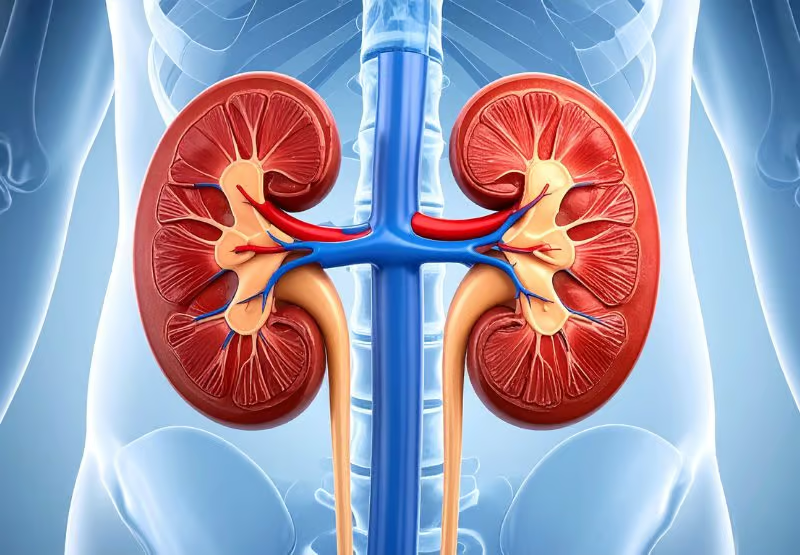
Chanca Piedra, commonly known as the “stone breaker,” shows promise in managing kidney stones and improving urinary health. A recent 2018 study found that a 12-week intake of P. niruri infusion significantly reduced the number of kidney stones and lowered urinary oxalate and uric acid levels in patients with metabolic issues like hyperoxaluria and hyperuricosuria. The plant also increased the excretion of beneficial minerals like magnesium and potassium, supporting its safety and efficacy in preventing and treating urinary calculi. This natural remedy could be a valuable addition to kidney stone management strategies.
Beyond its impact on urinary health, Phyllanthus niruri has also demonstrated notable liver-protective (hepatoprotective) and antioxidant effects. A 2020 study evaluated an aqueous extract of P. niruri in both cell cultures and animal models exposed to chemical liver injury. The extract significantly reduced elevated liver enzymes (such as ALT and AST), improved antioxidant defenses like glutathione and superoxide dismutase, and showed strong free‑radical–scavenging activity. It also lowered inflammatory markers, including TNF‑α, IL‑6, and NF‑κB, indicating meaningful anti‑inflammatory action at the tissue level.
These benefits are linked to several bioactive phenolic compounds identified in the plant, including corilagin, isocorilagin, quercetin, gallic acid, and related derivatives. Together, they contribute to the herb’s antioxidant, anti‑inflammatory, and cytoprotective properties. Taken as a whole, current evidence suggests that Chanca Piedra may support both kidney and liver health, making it a potentially valuable herbal option within broader strategies for managing urinary calculi and protecting against toxin‑induced liver damage.
Gut Health
In a 2011 study, researchers looked at the effects of Chancapiedra (Phyllanthus niruri L.), a medicinal plant, on bacteria linked to stomach issues, specifically Helicobacter pylori (H. pylori). The study found that extracts from the plant stopped H. pylori from growing, while allowing beneficial gut bacteria like Lactobacillus to thrive. These plant extracts also had strong antioxidant properties, meaning they help protect cells from damage. Researchers believe certain unique compounds in Chancapiedra could explain how it works against H. pylori.
Given these findings, Phyllanthus niruri shows strong potential as a natural treatment for H. pylori-related stomach infections. Its ability to target the harmful bacteria while preserving beneficial gut flora makes it a particularly promising alternative to antibiotics, especially in cases where antibiotic resistance is a concern.
Final Recommendations

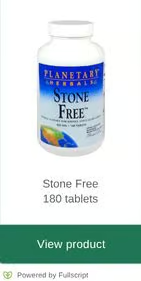
Safety Considerations and Contraindications:
Litholytic herbs, such as Chanca Piedra, are effective for dissolving kidney and gallstones. However, they must be used with care to prevent potential risks and complications. Below are key safety guidelines and contraindications.
Key Considerations
Short-Term Usage: Most litholytic herbs are best taken for one month, then discontinued. Exception: Chanca Piedra is often safe for year-round use, though periodic breaks are advisable.
Adequate Hydration: Drink plenty of water to flush dissolved stone material safely through the urinary system and reduce irritation.
Avoid Continuous Use: Litholytics should be taken sporadically, not daily, unless advised by a trained herbalist.
Assessing Stone Size: Large stones may pose risks if broken into smaller fragments. Imaging or clinical evaluation is recommended before starting litholytics.
Contraindications
Pregnancy and Lactation: Litholytic herbs are not recommended during pregnancy or breastfeeding.
Severe Kidney or Gallbladder Conditions: Avoid use in cases of advanced kidney disease, urinary obstructions, or acute gallbladder inflammation.
Medication Interactions: May interfere with diuretics, blood pressure medications, and drugs metabolized by the liver or kidneys.
Electrolyte Imbalances: Prolonged use can disrupt electrolyte levels, so caution is advised for people prone to dehydration or mineral deficiencies.
Disclaimer: There is no “one size fits all” when it comes to recommending Litholytic Herbs. Because of this, Nancy recommends Booking a 15 Minute Discovery call if you’re interested in taking this wonderful herb. It’s important to consult with a registered clinical herbalist or natural health practitioner trained in clinical herbalism for more resistant and deeper set health issues. They will be able to give a more tailored suggested serving and daily frequency based on your age, gender, body weight, and any present medical conditions.
Resources
Gall Stone Dissolving Plants | Potential Herbal Wealth with Litholytic Activity: A Review | In vitro litholytic activity of some medicinal plants on urinary stones | A Review on Kidney Stone and Its Herbal Treatment | Recent investigation of the medicinal plants’ effectiveness in the natural management of urinary and gallstones: a review | Chanca Piedra Unveiled: History, Popular Uses, Plant Compounds & How to Evaluate Products | Chanca Piedra Origins: Exploring the History Behind the Stonebreaker Name | Most supplements for stones not backed by science | Chanca piedra: Does it treat gallstones? | Chanca piedra: what it is used for, properties and contraindications | Phytotherapy in Urolithiasis: An Updated Overview of Current Knowledge | Chanca Piedra | Chanca Piedra: Benefits, Dosage, Side Effects, and More | Chanca Piedra – Uses, Side Effects, and More | Chanca Piedra: 5 Benefits and Side Effects Explained | Medicinal folklore of the species Phyllanthus amarus Schumach. & Thonn (chancapiedra) | Effect of phyllanthus niruri on metabolic parameters of patients with kidney stone: a perspective for disease prevention | Health Benefits of Chanca Piedra | Recent investigation of the medicinal plants’ effectiveness in the natural management of urinary and gallstones: a review | Phyllanthus niruri (Chanca piedra) leaf | What Is Collinsonia Root, and Is It Effective? | Collinsonia Root: A Remedy Rooted in American History | Stone Root – Uses, Side Effects, and More | Collinsonia Root | Collinsonia Root: Natural Benefits and Uses | What are the Uses and Health Benefits of Stone-Root (Collinsonia Canadensis)? | Collinsonia Root for Digestive Health | Collinsonia Root | Collinsonia Root by Standard Process: Benefits, Uses & Side Effects | Stone Root (Collinsonia canadensis)